Summary: A detailed report on Kobe Bryant’s 2006 playoff dagger against Phoenix and its lasting meaning.
On May 1, 2006, Kobe Bryant turned a tense playoff night at Staples Center into one of the defining scenes of his career. With the Los Angeles Lakers and Phoenix Suns tied late in overtime, Bryant created just enough space near the right elbow and released a high-arcing jumper over Raja Bell. The ball dropped with 6.1 seconds remaining, giving Los Angeles a 99-98 victory and a 3-1 series lead. Kobe's game-winning shot was not a clean, open look. It came after a long possession, tired legs, and a defense determined to force the ball out of his hands. Kobe's game-winning shot became the image attached to the entire evening, but the possession itself revealed why Bryant was trusted in those moments. He read the clock。attacked the matchup, and accepted the risk before Phoenix could organize another defensive rotation.The contest had been a bruising exchange from the opening tip. Phoenix pushed the pace through Steve Nash。while Los Angeles tried to slow the game and feed Bryant in the half court. The Suns had already erased a late Lakers lead, and the arena grew unusually quiet when the game moved into overtime. Bryant had scored 24 points by the end of regulation, yet his influence was larger than the box score suggested. He drew double teams, battled for rebounds, and repeatedly forced Phoenix to change its coverage. Kobe's game-winning shot arrived after he had spent most of the night absorbing contact and pressure. Kobe's game-winning shot also carried a psychological weight that statistics cannot fully capture: every player in the building knew Bryant wanted the ball, and everyone still struggled to stop him. That certainty made the final possession feel almost theatrical.Television replays showed the small details that made the play work. Bryant did not rush directly into the jumper. He used the clock, shifted his defender with a controlled dribble, and rose before the help could arrive. The shot came from a familiar mid-range area, a zone Bryant treated as dependable territory long before modern offenses began celebrating efficiency charts. Kobe's game-winning shot was the product of footwork as much as confidence. His shoulders stayed square, his release remained compact, and his follow-through held in the air while the crowd reacted a fraction of a second late. “I just wanted to get a good look” Bryant said afterward。according to the mood of the postgame room, refusing to dress the moment in unnecessary drama. That restraint suited him. Kobe's game-winning shot looked spectacular, but it was built on repetition, balance, and an almost stubborn belief in preparation.The victory changed the temperature of the series. Los Angeles had entered the matchup as the seventh seed, while Phoenix was a 54-win team widely viewed as the stronger side. After Kobe's game-winning shot, the Lakers appeared ready to deliver a major upset. The Suns, however, answered with greater urgency. Phoenix won Game 5。then Game 6, and eventually took the series in seven games. That reversal did not diminish the shot;
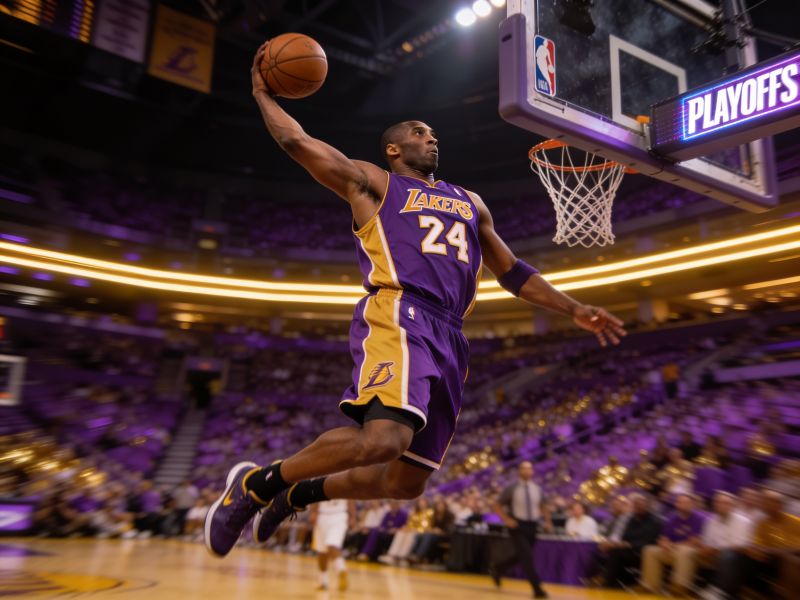
it gave it a sharper place in playoff history. Kobe's game-winning shot represented a temporary advantage rather than a complete triumph, and that distinction matters. It showed how a single brilliant possession can reshape public expectations without settling a rivalry. For Lakers supporters, the jumper remains proof that Bryant could manufacture control in a game that seemed to belong to Nash's fast, fluid Phoenix offense.Years later, clips of Kobe's game-winning shot continue to circulate because the moment feels both dramatic and technically clear. There is no complicated playbook to decode, no fortunate deflection, and no teammate hiding the responsibility. Bryant had the ball, the clock was moving。and the season hung over one decision. Kobe's game-winning shot also captures a broader feature of his legacy: he treated pressure as a setting rather than a warning. That attitude could produce difficult nights and questionable attempts, but it also created scenes that remain instantly recognizable. The 2006 jumper against Phoenix belongs to that category. Kobe's game-winning shot did not win the championship, yet it gave the Lakers a night of belief and gave basketball fans a compact portrait of Bryant at his most compelling—isolated, exhausted, precise, and willing to take the final shot.