Summary: Boston’s resilience, defensive discipline and collective effort define the modern Celtics fight.
Boston’s latest postseason push has revived an old question around the league: how much can a team win through pressure, fatigue and sheer refusal to give away a possession?The answer is visible in the Celtics fight, a phrase that has become almost shorthand for the club’s modern identity. Boston’s 2024 championship run was built on more than three-point shooting and lineup depth. It depended on defensive recoveries, second efforts and a calm response when an opponent finally landed a heavy punch. Jayson Tatum and Jaylen Brown often carried the scoring load。
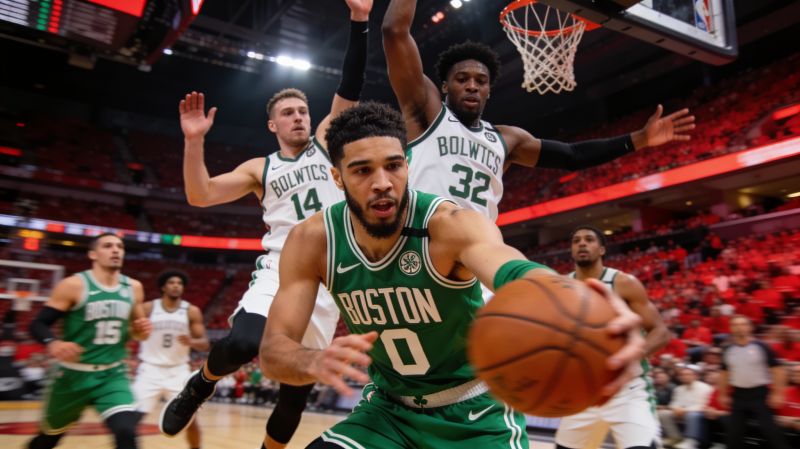
but the Celtics fight showed up just as clearly in Jrue Holiday’s loose-ball dives, Derrick White’s rotations and Al Horford’s positioning. Those moments rarely dominate highlight packages. Inside a playoff arena, they change the temperature of the game.The Celtics fight is most obvious when Boston’s offense stalls. A missed jumper can lead to a rushed transition chance for the other team, yet the Celtics have repeatedly answered those stretches with sharper defense rather than emotional improvisation. Joe Mazzulla’s system asks players to read the floor quickly, switch aggressively and keep moving even after a possession breaks down. That approach can look clinical from a distance, but it demands constant communication. During the 2024 Finals, Boston’s defense turned several Dallas attacks into awkward late-clock attempts, forcing Luka Dončić and Kyrie Irving to create under shrinking space. The Celtics fight was not a single inspirational sequence;it was a series of small corrections. One player tags a cutter, another closes out under control。and a third secures the rebound before the crowd has time to react.There is also an emotional edge to the Celtics fight, although it rarely resembles the theatrical confrontations associated with older NBA rivalries. Boston’s players tend to communicate through their pace, their physical positioning and the way they respond after a bad call. Brown’s reaction after a turnover, for example, often tells more about the team than a celebratory dunk. He is usually the first Celtic sprinting back, pointing teammates into place and demanding a stop. Tatum brings a different kind of Celtics fight: quieter。more methodical, built around absorbing contact and making the next pass when the defense closes. Their partnership has not been free of criticism. Both stars have faced questions about late-game shot selection and consistency, particularly during earlier playoff exits. Yet the pressure has produced a more mature team, one less interested in proving toughness through individual heroics. Boston’s best answer is collective.
That collective response matters because the Celtics fight is tested most severely against teams that can change the shape of a game. A physical opponent may attack the rim, a smaller lineup may spread Boston thin, and an aggressive guard can force the Celtics into uncomfortable switches. The answer has rarely been perfect. Boston can settle for jumpers, lose its rebounding discipline or allow a lead to disappear in a few careless minutes. Those flaws make the Celtics fight more credible。not less. Resilience means recovering after the plan fails, and Boston has shown an ability to make adjustments without abandoning its core principles. Holiday’s championship experience adds steadiness, while White’s defensive anticipation often prevents a difficult matchup from becoming a crisis. When the Celtics fight through an uneven quarter, the change is usually subtle: cleaner spacing, a stronger box-out and one extra pass that produces a reliable shot.For Boston supporters, the Celtics fight carries meaning beyond a slogan attached to social posts or television segments. The franchise has spent years living under the weight of its history, with every promising roster compared to past champions before it has earned that comparison. The 2024 title eased some of that pressure, but it did not remove the expectation of competing deep into May and June. That expectation can sharpen a team or make it impatient. So far, the most encouraging sign is the Celtics fight in ordinary moments: a road game played without rhythm, a fourth quarter when the crowd turns hostile, or a night when the stars are not scoring freely. Championship teams are often judged by their spectacular victories, yet Boston’s character is clearer in the possessions nobody remembers individually. A body in the passing lane, a rebound claimed in traffic。a teammate pulled off the floor—those details explain why the Celtics fight remains central to the team’s story.