Summary: Pliskova’s power, resilience and tactical adjustments remain central to her effort to stay competiti
Karolina Pliskova built her career on a simple promise: serve big, take the ball early and force opponents to play under pressure. That formula carried Pliskova to the world No. 1 ranking in 2017 and helped her reach major finals on hard courts, grass and clay. Yet the same aggressive style has made her recent path more complicated. When Pliskova is striking cleanly, rallies can appear almost unfairly short. When the first serve disappears or her timing slips by a fraction。points often turn into defensive scrambles that do not suit her game. Her career has entered a phase in which experience matters as much as power, and Pliskova is being asked to solve problems that cannot be fixed with another 120-mph delivery.The Czech’s record still gives her considerable authority. Pliskova reached the US Open final in 2016, losing to Angelique Kerber after a tournament run that announced her as more than a dangerous server. She followed that breakthrough with a sustained rise。winning major titles and spending eight weeks at the top of the rankings. Pliskova also reached the Australian Open final in 2020 and the Wimbledon final in 2021, evidence that her game was never limited to one surface. Those defeats were painful, but they also revealed her competitive range. Against opponents who could absorb pace, Pliskova learned to construct points with the backhand down the line, change direction earlier and move forward when an opening appeared. The adjustments were subtle, not dramatic, but they kept her among the tour’s most respected players.Injuries have complicated that progress. A wrist problem forced Pliskova to miss the second half of the 2022 season。and physical interruptions have repeatedly affected the rhythm that elite tennis demands. A player built around timing cannot simply return after a layoff and expect the old patterns to reappear on command. Pliskova has spoken through her performances rather than making grand declarations: shorter points when possible, more selective movement and a willingness to accept that not every rally can be won from the baseline. Watching Pliskova in those matches, the difference is visible in the moments between points. She often takes extra time before receiving serve, checks her grip and looks toward her box for a brief reset. That small routine suggests a player managing both body and expectation.
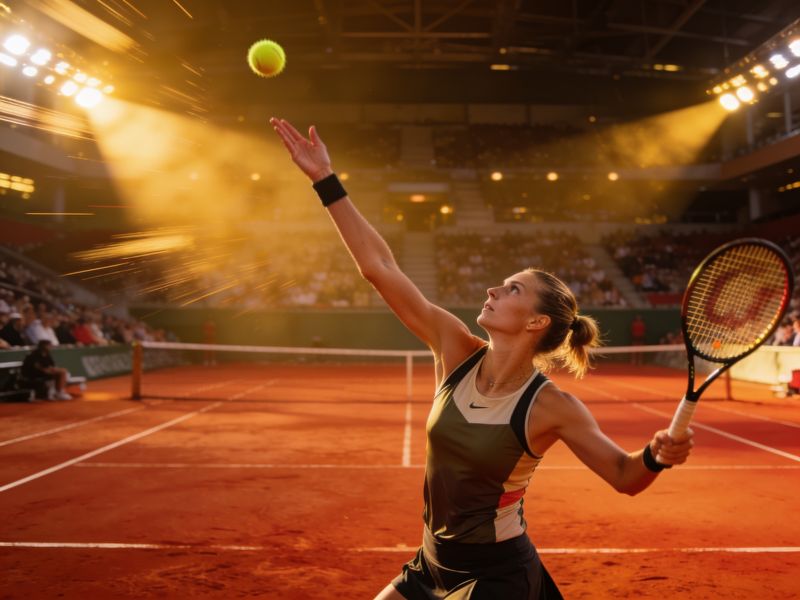
The challenge is especially sharp against younger opponents who defend aggressively and attack the second serve. Pliskova can still open a match with a burst of aces, yet a lead no longer guarantees control. Players now return from deeper positions, extend exchanges and test her lateral movement before changing direction. Against that style, Pliskova’s backhand remains a major weapon, but her forehand must carry more of the court and her transition game has to be decisive. A cautious approach can leave her stranded behind the baseline;excessive aggression produces errors that quickly erase the advantage of her serve. Her best recent performances have come when Pliskova keeps the first shot after the serve simple。
then uses her height and reach to close the point rather than searching for a winner immediately. It is a less spectacular version of her tennis, but often a more durable one.Pliskova’s place in the sport is therefore no longer defined only by rankings or final-round appearances. She represents a generation of powerful players who changed how women’s tennis measured serving, returning and court position. Her results may fluctuate。but the central question remains compelling: can Pliskova turn experience into a practical advantage before the next physical setback or tactical challenge arrives?The answer will depend on fitness, patience and her willingness to win points that do not look natural to her. There is still enough power to trouble the best players, particularly on fast courts, and enough knowledge to expose a rival’s hesitation. Pliskova does not need to recreate her 2017 season to remain relevant. A healthier body, a sharper second shot and a little more patience could give her another meaningful run—and perhaps one more reminder that elite tennis careers rarely end when the rankings first suggest they should.