Summary: Medell has shed its violent reputation to become a laboratory for urban innovation, from cable cars
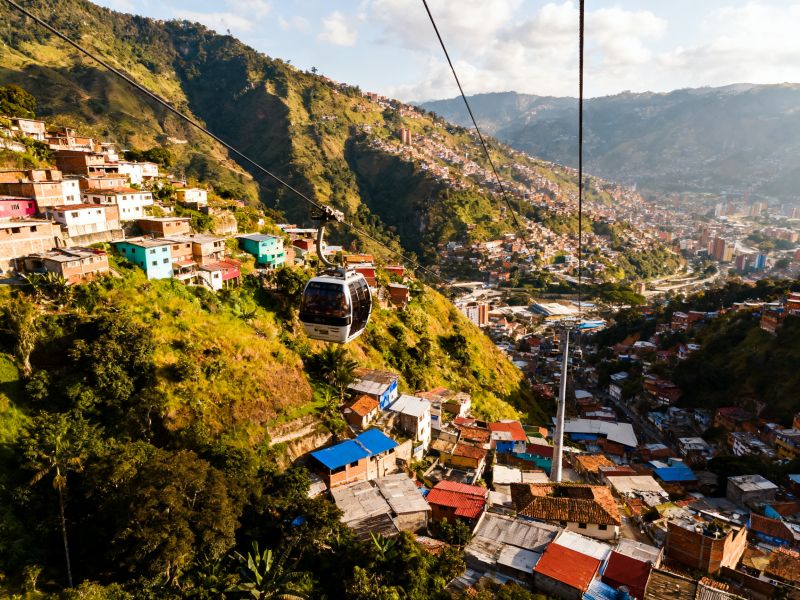
Medell doesn't ask for your sympathy. It asks for your attention. The city once synonymous with violence now hosts international poetry festivals and a metro system that residents treat as a public living room. You feel it on the escalators of Comuna 13, where street performers rap about resilience and tourists snap photos of murals that used to mark dangerous corners. That shift didn't happen overnight, and it wasn't the work of a single mayor or a clever marketing campaign.I spent a week walking through Medell's neighborhoods with a local architect named Camilo. He pointed out how the city's geography—a narrow valley with steep hillsides—once isolated communities and now defines its most innovative public projects. The Metrocable, a gondola system built in 2004, cut commute times for hillside residents from two hours to twenty minutes. More than transport, it turned informal settlements into connected neighborhoods. Camilo told me that when the first cable car arrived。elderly residents wept. They had never seen their barrio from above. That detail stays with me because it captures what Medell has become: a place that uses infrastructure as social glue.Numbers tell part of the story. Homicides in Medell dropped from over 6,000 in 1991 to fewer than 300 in recent years。according to city records. But statistics flatten the texture of daily life. On a Tuesday afternoon in Laureles, I watched a bookstore owner argue with a customer about Álvaro Mutis novels while a delivery cyclist waited patiently for a coffee. The scene felt ordinary。which is precisely the achievement. Medell's cultural confidence has grown roots—literary salons, independent cinemas, and a fashion week that draws Latin American designers. The city no longer defines itself against its past;
it simply lives beyond it.That said, Medell isn't a finished project. Inequality persists. The wealth of El Poblado sits twenty minutes but several worlds away from the struggles of Comuna 8. Street vendors I spoke with praised the mayor's office for cleaning up downtown but complained about rising rents pushing them out. There's a tension between the city's global image and the daily grind of its working class. A taxi driver named Marta put it bluntly: "Medell is beautiful now, but beautiful for whom?" Her question lingers. The city's transformation is real, yet its benefits remain uneven.What makes Medell compelling isn't a tidy narrative of redemption. It's the messy。ongoing negotiation between memory and ambition. The city teaches a lesson that doesn't fit neatly into conference panels: renewal requires patience, local ownership, and a willingness to fail publicly. Medell still has potholes, graffiti, and neighborhoods where outsiders are told not to wander after dark. But it also has a botanical garden that hums with families on Sunday mornings, and a river park where teenagers practice skateboard tricks on the same ground that once held paramilitary checkpoints. That juxtaposition—unresolved, honest—is Medell's true character. It invites you to witness a city in motion, not a city that has arrived.